
Resource Center

Situations

We each have unique challenges, and finding the right support starts with understanding your situation. In this section, you’ll discover helpful resources tailored to different circumstances. Whatever you’re facing, explore guidance, tools, and insights designed to empower you on your journey.”
“I Need to Talk to Someone Now”
Need help but don’t know who to tell?
SafeVoice is Nevada’s anonymous reporting system for students. If you or a friend are experiencing abuse, bullying, exploitation, self-harm, threats, or any situation that feels unsafe, you can report it confidentially 24/7.
Call: 1-833-216-SAFE (7233)
Online: safevoicenv.org
App: SafeVoice NV
Download SafeVoice NV from the Apple App Store or Google Play store.
- Bullying
- Abuse or neglect
- Self-harm or suicide concerns
- Threats of violence
- Eploitation concerns
- A friend who may be in danger
- School safety threats
- Any situation where a student’s well-being is at risk
If someone is in immediate danger, call 911.
Someone Is Asking Me for Pictures
What You Can Do Right Now
- Do not send any pictures.
- Stop responding if the conversation makes you uncomfortable.
- Take screenshots of messages.
- Block the person.
- Tell a trusted adult immediately.
- Report the account on the platform.
Local Help
- School counselor or trusted teacher
- Washoe County School District SafeVoice
- HTPA resources and support network
If You Are in Immediate Danger Call 911.
Someone Has My Pictures and Is Threatening Me
What You Can Do Right Now
- Do not send more pictures.
- Do not pay money or gift cards.
- Save all messages, usernames, and screenshots.
- Stop communicating with the person.
- Tell a trusted adult immediately.
- Report the account.
Local Help
- Reno Police Department
- Sparks Police Department
- Washoe County Sheriff’s Office
- SafeVoice (students)
- Trusted parent, counselor, school administrator, or guardian
Remember
This is not your fault. People who use threats and manipulation are responsible for their actions, not you.
I Am Being Hurt at Home
What You Can Do Right Now
- If you are in immediate danger, call 911.
- Tell a trusted adult immediately.
- Talk to a school counselor, teacher, nurse, coach, or school resource officer.
- Keep a list of safe places you can go in an emergency.
Local Help
- Child Protective Services
- Safe Embrace
- Local law enforcement
- School support staff
Remember
You deserve to be safe. No one has the right to hurt you.
I Don't Feel Safe Where I Live
What You Can Do Right Now
- Go to a safe location if possible.
- Contact a trusted adult.
- Call 911 if someone is threatening or harming you.
- Reach out to a counselor or advocate.
Local Help
- Safe Embrace
- Eddy House (for youth and young adults)
- Local law enforcement
- School counselors
Remember
Your safety comes first. Trust your instincts if something doesn’t feel right.
I Think I'm Being Groomed
Warning Signs
- Someone asks you to keep secrets.
- Someone gives gifts or money.
- Someone wants private conversations.
- Someone asks for photos.
- Someone tries to isolate you from family or friends.
- Someone pressures you to meet in person.
What You Can Do Right Now
- Stop communicating.
- Save evidence.
- Block the person.
- Tell a trusted adult immediately.
Local Help
- School counselors
- Parents or guardians
- HTPA resources
- Law enforcement if threats or exploitation are involved
Remember
People who groom children often pretend to care while slowly building control.
I Think a Friend Is Being Exploited
What You Can Do Right Now
- Take your concerns seriously.
- Talk privately with your friend.
- Encourage them to speak with a trusted adult.
- Tell a trusted adult yourself if safety is at risk.
- Do not try to handle the situation alone.
Warning Signs
- Suddenly receiving gifts or money
- Secretive relationships
- Older boyfriend/girlfriend
- Frequent running away
- Unexplained hotel visits
- Significant changes in behavior
Local Help
- School staff
- SafeVoice
- Law enforcement when appropriate
- HTPA
Remember
Being a good friend sometimes means getting adult help.
I'm Having Thoughts of Self-Harm
What You Can Do Right Now
- Tell a trusted adult immediately.
- Do not stay alone if you feel unsafe.
- Reach out to someone you trust.
- Call or text 988.
Local Help
- 988 Suicide & Crisis Lifeline
- Northern Nevada Crisis Care services
- School counselors
- Emergency room if you are in immediate danger
Emergency
If you think you might act on these thoughts, call 911 or go to the nearest emergency room right away.
Remember
You matter. Help is available, and things can get better.
I Ran Away and Need Help
What Can Do Right Now
- Contact a trusted adult.
- Find a safe public place.
- Call for help if you are in danger.
- Avoid accepting rides, money, food, or shelter from strangers.
Local Help
- Eddy House
- Safe Place locations
- Law enforcement
- School counselors or trusted adults
Remember
Running away can increase the risk of exploitation. There are people who can help keep you safe.
Someone Is Controlling Me
Signs of Control
- Telling you who you can talk to
- Monitoring your phone
- Threatening you
- Demanding passwords
- Controlling your money
- Making you feel trapped
- Isolating you from friends and family
What You Can Do Right Now
- Talk to a trusted adult.
- Create a safety plan.
- Save evidence when it is safe to do so.
- Reach out for support.
Local Help
- Safe Embrace
- School counselors
- Law enforcement if threats are involved
- HTPA support resources
Remember
Healthy relationships are built on respect, not fear or control.
Northern Nevada Quick Help Center
Emergency: 911
Suicide & Crisis Lifeline: 988
SafeVoice Nevada: Report concerns about student safety.
Eddy House: Support for homeless and at-risk youth and young adults in Northern Nevada.
Safe Embrace: Advocacy and support for victims of domestic violence and sexual violence in Northern Nevada.
School Counselor, Teacher, Coach, School Resource Officer: Safe adults who can connect youth to help immediately.
HTPA: Prevention education, resources, and support pathways for youth and families.
Sexual Abuse, Trafficking, Child Exploitation
If you or someone you know is being exploited, experiencing sexual abuse, sexual violence, grooming, or are a victim of trafficking.
Sexual Assault
Are you or someone you know a victim of Sexual Assault? Contact RAINN
Mental Illness
National Alliance on Mental Illness (NAMI) – Offers education, advocacy, and support groups for individuals and families affected by mental illness. You can find more information here.
Victims of Crime
Office for Victims of Crime (OVC) – Provides assistance, funding, and resources for crime survivors.
Victim, Survivor & Family Support
NCMEC has services available for victims, survivors, siblings and caregivers looking for mental health and peer support.
If you or someone you know needs healing and recovery resources, please reach out to 1-800-THE-LOST or gethelp@ncmec.org.
Removing your explicit content.
NCMEC offers a service called Take It Down. Online platforms can use hash values to detect these images or videos on their public or unencrypted services and take action to remove this content. Learn more about how to use the service here.
- How it works:
- Users upload a hash (a digital fingerprint) of the image or video to the platform.
- The actual image or video never leaves the user’s device and is never seen by anyone.
- Participating tech platforms (like Meta, OnlyFans, Pornhub, and Yubo) use these hashes to detect and remove matching content from their services.
- Anonymity: Users can remain anonymous throughout the process.
- Support: NCMEC also offers emotional support and guidance through their hotline and email.

If your over 18, what can you do if someone is threatening to share your intimate images?
Stop Non-Consensual Intimate Image Abuse (StopNCII) – Resource for adults to remove image-based sexual abuse from online platforms

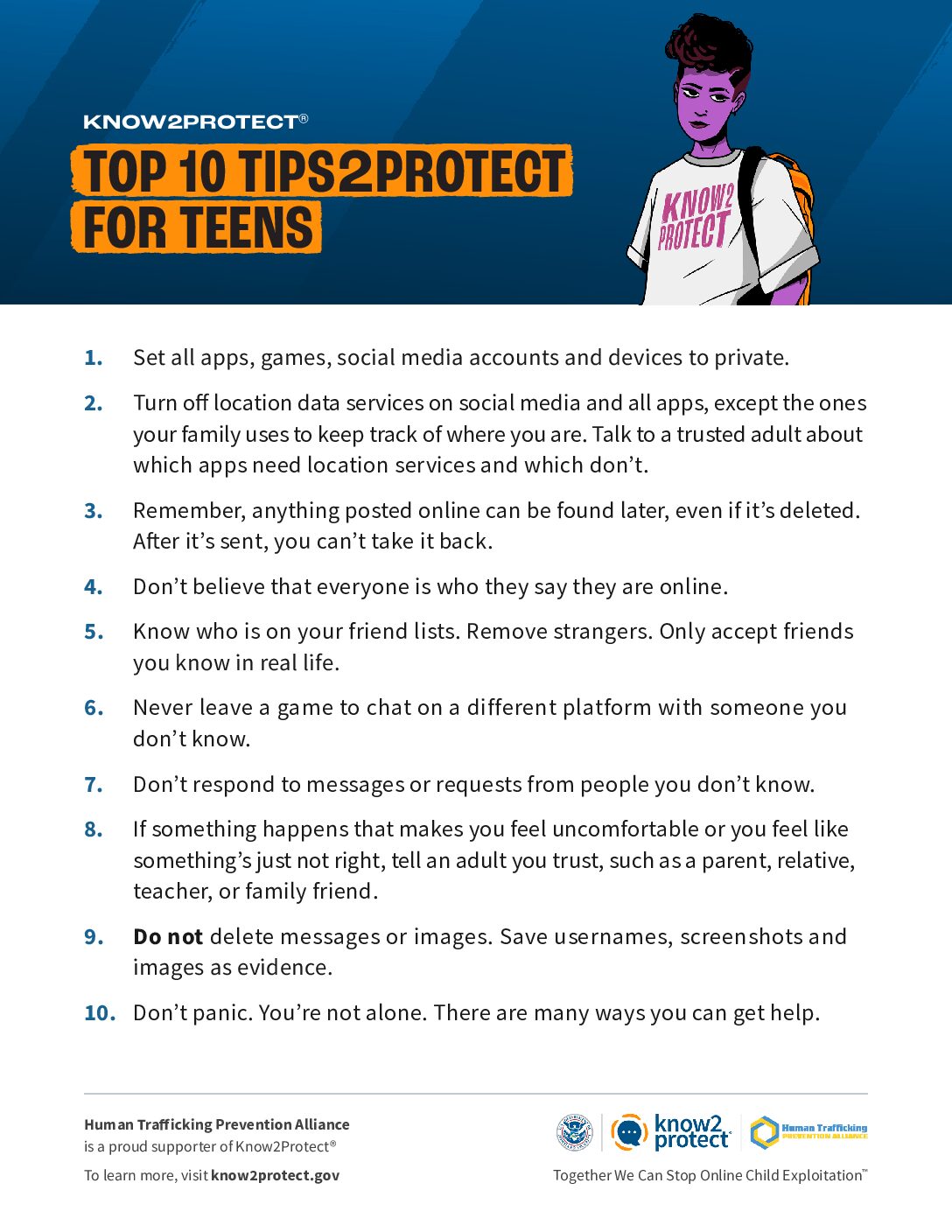
Tips for Teens on Keeping Safe
Click on the picture to download and print these tip sheets.
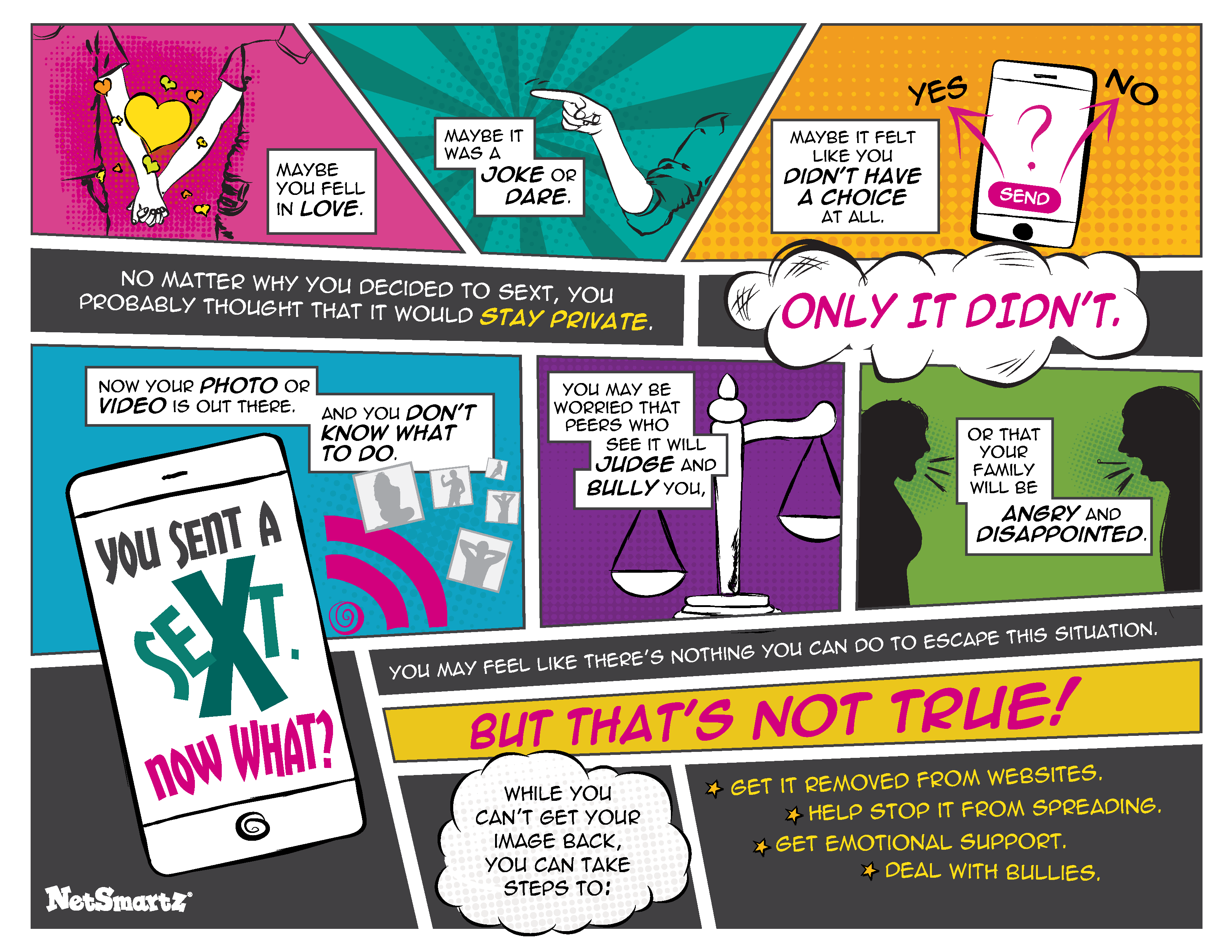
You Sent a Sext. Now what?
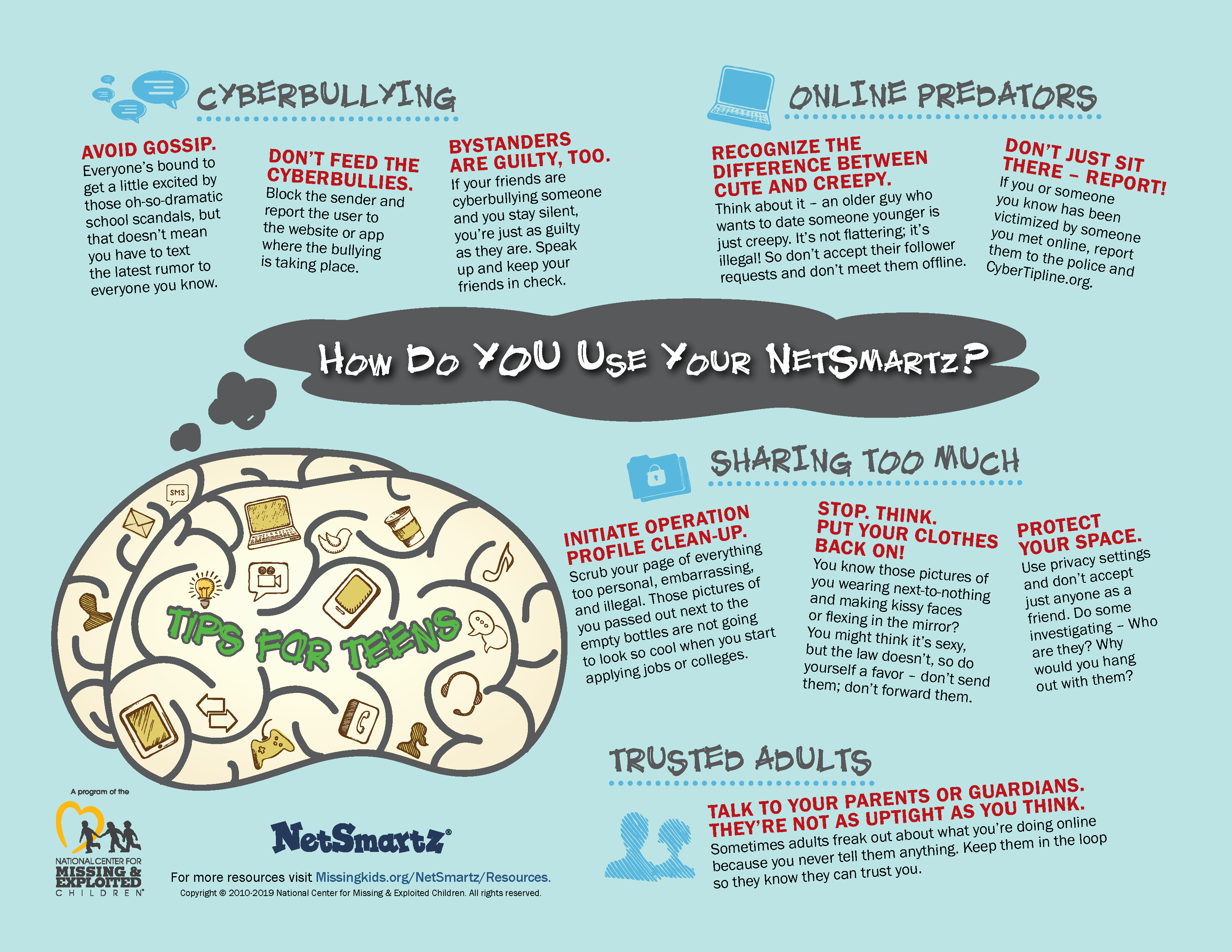
How do you use your NetSmartz?
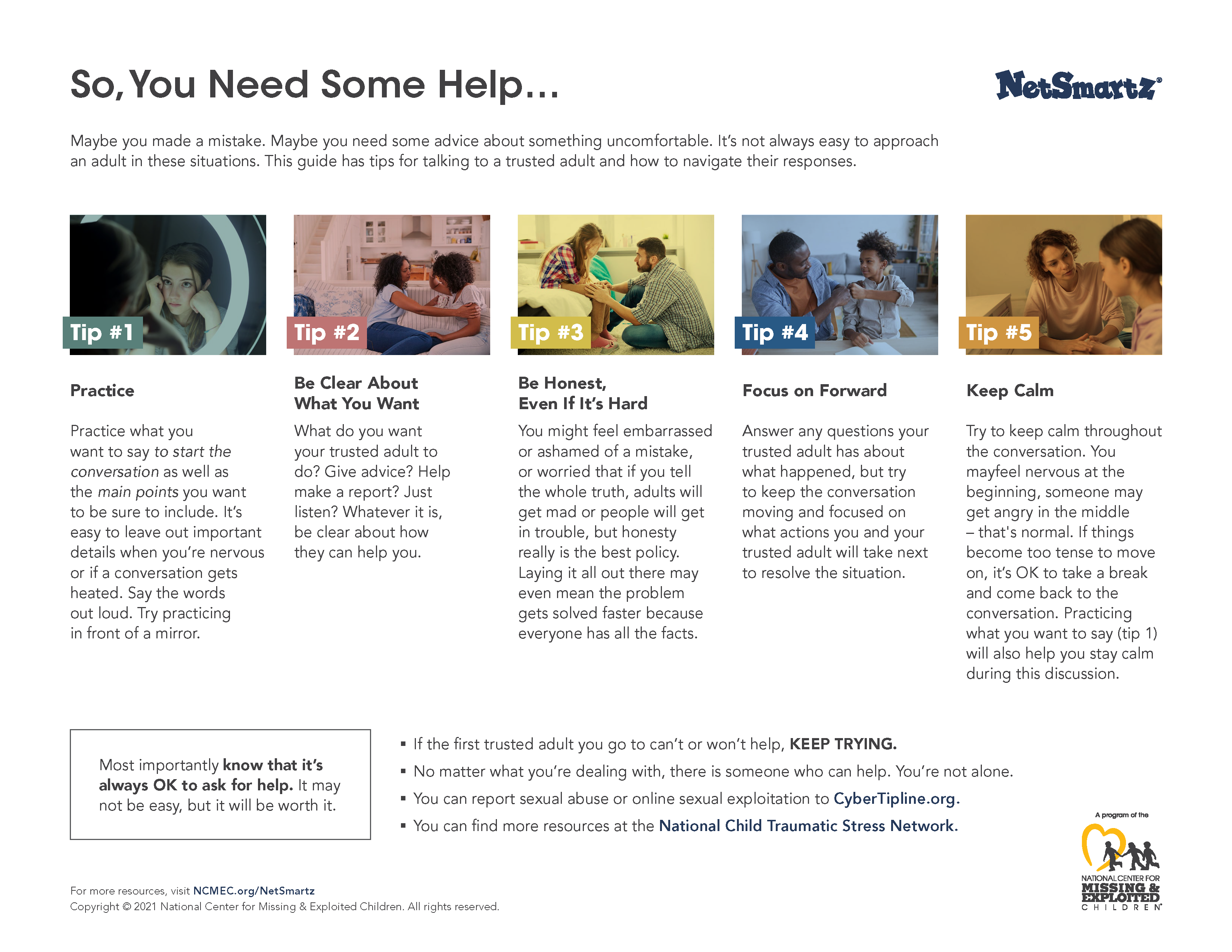
So, you need some help…

Think before you send!

Washoe County Resources
Reno, Nevada
SafeEmbrace
Washoe County Human Services
Domestic Violence Resource Center
Domestic Violence Resource Center
The Eddy House
Eddy House
888 Willow St, Reno, NV 89502
Nami Northern Nevada
- 3100 Mill St, Suite 114, Reno, NV 89502
Reno Sparks Tribal Health Center
Reno Sparks Tribal Health Center
Local Resources
- Safe Embrace: Offers services and resources for victims of sexual assault, abuse, and human trafficking. They have a 24-hour hotline at (775) 322-3466.
- The Children’s Cabinet (SAFE PLACE) Call 1-800-536-4588 or TEXT “SAFE” and current location to 4HELP (44357) to access a Children’s Cabinet Case Manager and a safe place
- Crisis Call Center: Provides a sexual assault helpline at (775) 224-7600 and a 24-hour crisis hotline at 1-800-273-8255.
- Washoe County Human Services Agency: Handles reports and investigations of child abuse or neglect. Contact them at (775) 785-8600.
- Reno Police Department Victim Services Unit: Offers advocacy and support for victims. Reach out at (775) 657-4519.
- Washoe County Sheriff’s Office Victim Advocate: Provides emotional and practical support for victims. Contact Heather Dreiling at (775) 325-6454.
- Nevada Urban Indians, Inc. Victim Services Program: Offers culturally sensitive support for victims. Call (775) 788-7600,
- Domestic Violence Resource Center: Provides a 24-hour hotline for domestic violence and sexual assault at (775) 329-4150.
- The Eddy House: Provides a safe environment where young people can work with supportive staff and access essential resources for their overall well-being. Services include basic necessities such as safe overnight shelter, showers, laundry, food, clothing, personal care items, lockers, and computers. (775) 384-1129.
- NAMI Northern Nevada (Local Affiliate)
3100 Mill St, Suite 114, Reno, NV 89502
Phone: (775) 433-1470 - Reno Sparks Tribal Health Center: The Reno-Sparks Tribal Health Center (RSTHC) is our tribally-owned and operated clinic, location on the Reno Colony at 1715 Kuenzli Street. The health center is committed to enhancing the quality of life of all American Indians by providing a culturally competent and patient-centered continuum of care
1715 Kuenzli St, Reno, NV 89502
(775) 329-5162
Health Center | Reno-Sparks Indian Colony, NV - Awaken: 433 Spokane St, Reno, NV 89512
Phone: (775) 393-9183
Guidance*

Requests for Inappropriate Content
Sexual solicitations can sometimes lead to harmful relationships with adults. These individuals may attempt to earn your trust by providing affection, attention, gifts, or other incentives.
In some cases, they might even suggest meeting in person. You could also encounter someone online whose conversation quickly shifts to inappropriate or sexual topics.
This behavior, known as grooming, can be hard to recognize. While many of your friends—both online and offline—genuinely care about you, not everyone has your best interests at heart. That’s why it’s crucial to stay cautious and alert to inappropriate requests
I think a friend is being groomed. What can I do?
If you suspect your friend is being groomed, it’s important to act thoughtfully and carefully. Here’s what you can do:
Talk to your friend: Approach them gently and express your concern. Let them know you’re there to support them without judgment. Avoid being confrontational, as this might make them defensive.
Encourage them to seek help: Suggest trusted adults, counselors, or organizations that can provide guidance. If they’re hesitant, offer to help them connect with these resources.
Document concerning behavior: If you notice specific actions or messages from the adult involved, keep a record. This can be helpful if authorities need evidence.
Report the situation: If you believe your friend is in immediate danger or the grooming is escalating, report it to local authorities, a cyber tipline, or organizations specializing in child protection.
Stay supportive: Grooming can be emotionally manipulative, and your friend might struggle to see the situation clearly. Be patient and continue to offer your support.
Your actions could make a huge difference in protecting your friend.
I have been talking to someone online and they want to meet up.
It’s great that you’re thinking carefully about this—it shows you’re looking out for your safety, which is so important. Here are some steps to consider:
Pause and reflect: Take a moment to think about this person’s intentions. Have they been respectful and honest? Do you feel completely comfortable with them?
Talk to someone you trust: Share this with a trusted adult, like a parent, teacher, or counselor. They can help you assess the situation and guide you.
Meet in a safe, public place: If you decide to meet, make sure it’s in a busy, public location. Bring a friend or family member with you, and let others know where you’ll be.
Set boundaries: Be clear about what you’re comfortable with and stick to those boundaries. If anything feels off, trust your instincts.
Stay in control: Keep your phone charged and with you at all times. Have a plan to leave if you feel unsafe.
Be cautious with personal information: If you haven’t already, avoid sharing sensitive details like your address, school, or anything that could compromise your safety.
Your safety is the top priority. If anything about this situation feels wrong or makes you uneasy, it’s okay to step back and say no. You deserve to feel safe and respected.
*Our guidance is based on professional experience and is intended to help individuals make informed decisions. However, this information should not be considered formal advice. Each situation is unique, and we encourage individuals to seek additional perspectives when making important choices
